Garbage Time Isn't Garbage: How the Final Eight Minutes of a Blowout Quietly Print Money
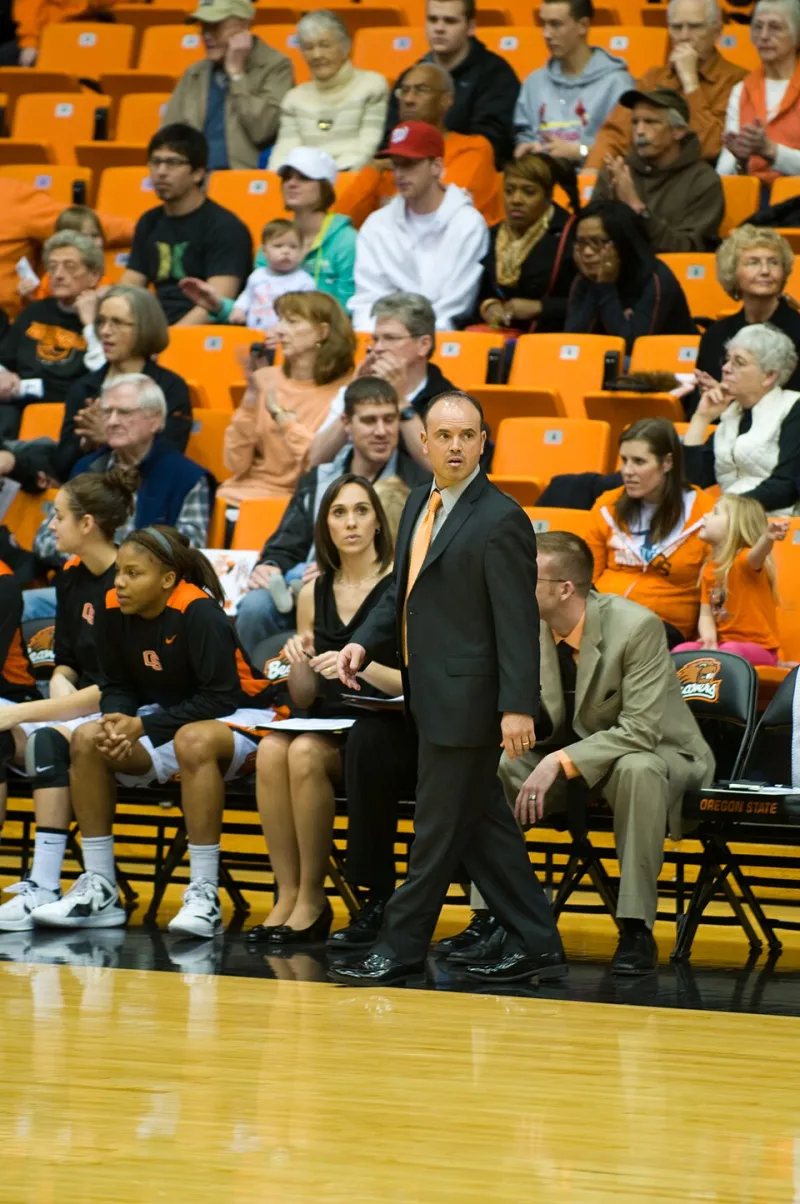
Photo: Beaverbasketball, CC BY 2.0, via Wikimedia Commons
There's a moment every college basketball bettor knows. Your team is up 22 with eleven minutes left, the game's clearly over, and you've already got one eye on the next tip. The book, meanwhile, is posting a second-half spread and total like nothing happened.
Here's the thing most casual bettors miss: those final minutes aren't dead time. They're a completely different game being played by completely different players, and the market often prices them like they're the same one. If you've ever wondered why sharp live bettors seem glued to their screens during games that stopped being interesting an hour ago, this is why.
The Book's Dilemma in a 20-Point Game
Sportsbooks aren't rooting for outcomes. They want balanced action and a healthy hold. But live betting on a blowout creates a genuinely awkward pricing problem: the outcome of the game is nearly settled, so all the action funnels into spreads and totals that hinge on one question — how hard will each bench play?
That's a question with no clean answer. Coaches empty their rotations on different timelines. Some pull starters with a 15-point lead and eight minutes left; others leave their star in until the 3:30 media timeout out of habit or conference pride. Books shade lines conservatively in these windows because they can't model a walk-on's motor. Conservative shading means slow adjustment. Slow adjustment means opportunity.
Three Signals That Tell You the Bench Game Is Live
Not every blowout is bettable. The garbage-time window only opens under specific conditions, and you need to check all three boxes before touching a live number.
1. Star foul trouble earlier in the game. This is the sneaky one. If a team's best player picked up two quick first-half fouls, the bench already logged real minutes tonight. That means the walk-ons will enter sooner and the fallback unit will be deeper than usual. A second-half total built on normal rotation depth is now mispriced — usually toward more scoring variance than the number implies.
2. Pacing tells you everything. Watch the first four minutes of the second half, not the scoreboard. If a team up 18 is still pushing in transition and jacking threes, that's a program culture thing — mid-majors and high-tempo schools like a lot of Big 12 and Big Ten second units tend to keep playing. If they're walking it up and draining the clock, the coach has already waved the white flag and the under side of a live total deserves a look.
3. Rotation depth, or the lack of it. A team with a nine-man rotation produces a predictable, orderly garbage-time environment — totals hold. A team playing six guys all night? The moment the lead balloons, you get five strangers on the floor who've shared maybe 40 possessions all season. Chaos. Missed assignments. Free throws. Live totals that assumed order are about to get shredded in one direction or the other.
Spotting the Slow Line
So how do you actually catch a book sleeping? Timing is the whole game.
The key window is the two-to-three minute stretch right after the leading coach makes his first mass substitution. Books reprice their live totals based on scoring pace data, which lags. If the bench unit scores on three straight possessions and the live total hasn't budged more than a point or two, you've likely found your window.
Compare across books, too. This is where line shopping stops being optional. One book's algorithm might have already baked in a 145-second-half environment while another is still displaying a number priced when the starters were in. In college basketball, where 30 books can post 30 different live totals on the same game, that gap is your entire edge.
The Traps That Eat Live Garbage-Time Bettors
A quick reality check, because this angle has teeth:
-
Senior night and rivalry games break the rules. Coaches leave starters in longer, benches play harder, and walk-ons get ceremonial minutes that distort everything. Skip these.
-
The free throw spiral. Late-game fouling in college basketball is constant — bonus situations hit fast with the shorter college shot clock. Live totals can swing five points on free throws alone, sometimes against you before you can react.
-
Small limits are a feature, not a bug. Books cap these bets low because they know the risk. You're not building a bankroll strategy on $500 garbage-time wagers. This is a $25-to-$50 grind that pays off over a full season.
Why This Stays Open
You'd think by now every book would have solved garbage-time pricing. They haven't, for a simple reason: the volume of games. During a January Saturday, a book is running live lines on 60-plus college games simultaneously. The pricing engine can't fine-tune the final eight minutes of a mid-major blowout when it's juggling three ranked matchups. Human attention doesn't scale, and neither does algorithmic attention.
That's the whole pitch. The softest numbers on the board aren't hiding in primetime — they're sitting in the least-watched stretch of the least-watched game, waiting for the one bettor who stuck around after everyone else left. Stick around.
Bet responsibly. Live betting moves fast — never wager more than you'd be comfortable losing in a single possession.


