That Sudden Line Move Might Be a Trap: Reading Reverse Movement Like a Sharp
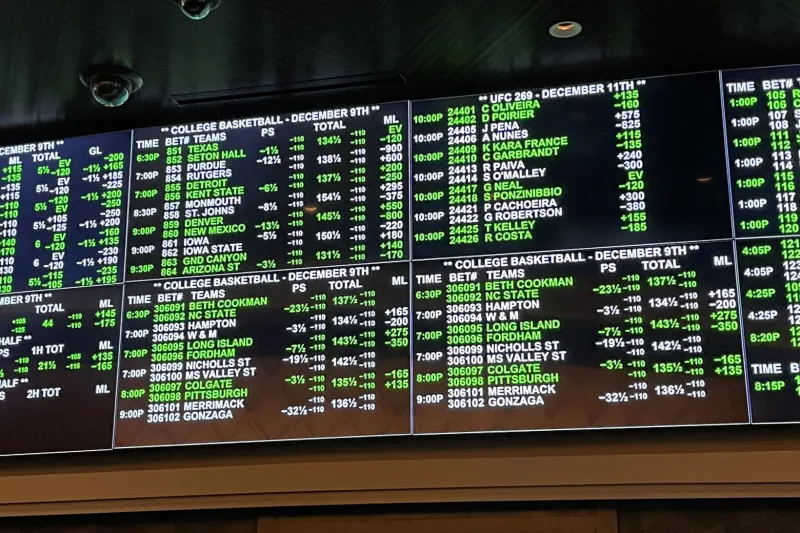
Photo: sportsbook odds board on screen with betting lines, via wtop.com
You've seen it happen. A line opens at Chiefs -3.5, the public piles onto Kansas City, and by Saturday the number has somehow climbed to -5.5. Your first instinct is to think the market knows something you don't. Sometimes that's true. Sometimes, though, you're watching a magician's misdirection — and the whole trick was built to get you to click the wrong button.
At UFA222 Sports Hub, we spend a lot of time on habits that separate winning bettors from donating ones. Today we're covering one of the sneakiest: the trap line, and how reverse line movement exposes it.
What a Trap Line Actually Is
A trap line is a number a sportsbook posts (or moves to) with the specific goal of getting casual money on the wrong side. Books aren't charities, but they're also not always trying to balance action 50/50. When the public is overwhelmingly on one side and the book is confident in the other, the most profitable move is to make the popular side look even more attractive — a juicier spread, a better price — and let the masses walk into it.
Think of it like a Black Friday sale. The discount is real, but the whole setup exists because the store knows exactly what you'll do when you see it.
Organic Movement vs. Manufactured Steam
Real line movement has a fingerprint. When sharp bettors hammer a number, the book reacts by making that side harder to bet — moving the line against the sharps to discourage more of that action. That's the market working normally.
A manufactured move looks different. The line shifts toward the public side, even though the tickets and money are already lopsided. That's backwards. If 75% of bets are on the Cowboys and the line moves from Dallas -4 to Dallas -6, the book isn't reacting to sharp money — it's baiting more Dallas tickets at a worse number.
How to Spot It: RLM Meets Betting Percentages
The core tool is reverse line movement (RLM) — a line moving in the direction opposite to the betting percentages. Pair it with two data points most sportsbooks and free tracking sites publish:
- Ticket percentage: the share of total bets on each side
- Money percentage: the share of actual dollars on each side
Here's the quick matrix:
- Heavy tickets, heavy money, line moves WITH the crowd: normal public-driven move. No edge, no trap. Pass or find a different angle.
- Heavy tickets, but line moves AGAINST the crowd: classic RLM. Sharps are likely on the unpopular side. Pay attention.
- Light tickets but heavy money on one side, and the line moves that way: big bettors, probably professionals, quietly loading up. Often the strongest signal on the board.
- Heavy tickets, line moves toward the crowd, money stays balanced: this is the trap pattern. The book is inviting more public money onto a side it doesn't fear.
A Quick NFL Example
Take a random December slate. Bills open -2.5 at home against a division rival. By Friday, 78% of tickets are on Buffalo — but the line drops to -2, then -1.5. The book is lowering the price on the team everyone already likes. That's not generosity; that's a clearance sale on a number the sharps have already told them is wrong. Historically, when a majority-supported favorite gets steamed toward the public, the unpopular side covers at a noticeably better rate than a coin flip. It's not a guarantee — nothing is — but it's one of the most reliable free signals on the board.
An NBA Wrinkle
Basketball adds a twist: key numbers matter less, so books manipulate with juice more than with points. Watch the price. If the Lakers are pulling 80% of tickets and the line goes from Lakers -4 (-110) to -4 (-125), that's the same trap in different clothing — the book is charging a premium for the popular side instead of moving the number. Same misdirection, different currency.
The Checklist: 30 Seconds Before You Bet
Run this before locking anything in:
- Check ticket and money splits on any line-tracking site.
- Compare the current line to the opener. Which direction did it move?
- Ask the contradiction question: is the line moving toward the side the public already likes? If yes, slow down.
- Look for RLM confirmation — especially when the money percentage opposes the ticket percentage.
- Consider the timing. A move right after injury news is information. A move with no news and lopsided tickets is often engineered.
- Decide what the move wants you to do — then consider doing the opposite, or simply passing. Passing is always legal and frequently correct.
The Bottom Line
The sportsbook isn't your friend, but it isn't omniscient either. It's a business running pricing experiments, and sometimes the pricing is designed to herd you. Reverse line movement against heavy public percentages is the loudest tell you'll get for free. Respect it, cross-check it with the money split, and you'll stop being the fish the line was built to catch — and occasionally, you'll be the one swimming the other way.